. . . . . . . . . . . . . . . . . . . . . . . . . . . . . . . . . . . . . . . . . . . . . . . . . . . . . . . . . . . . . . . . . . . . . . . . . . . . . . . . . . . . . . . . . . . . . . . . . . . . . . . . . . . . . . . . . . . . . . . . . .
Showing posts with label patchwork. Show all posts

Wednesday, 4 March 2026

Patchwork, But Make It Fashion: A Quilted Zipper Hoodie


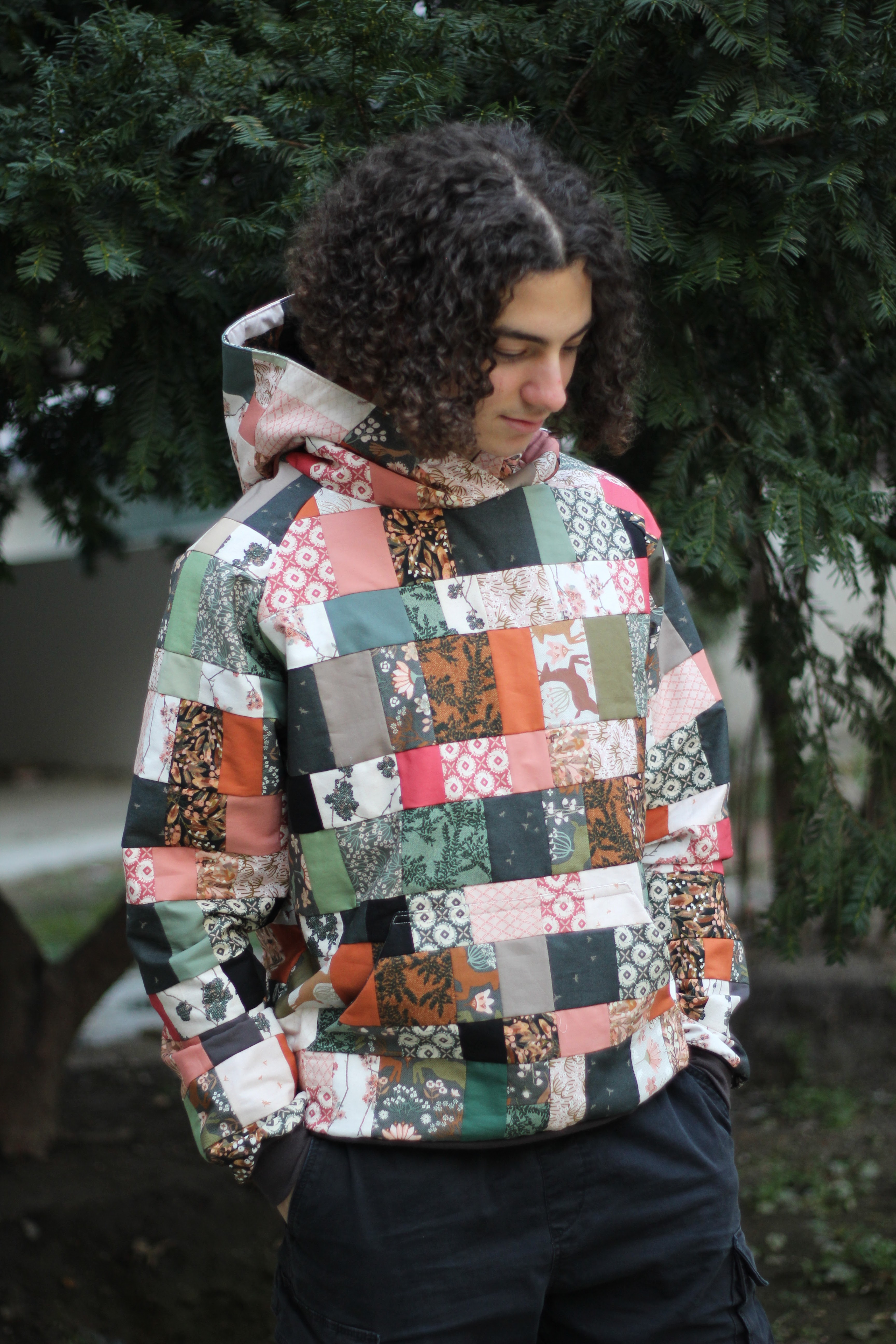
It’s hard to believe it’s been four years since I made that Botanist patchwork hoodie for my son — and, well, it’s definitely running a bit small now! I couldn’t wait to make a new one with fabrics that felt more him — and with the Soar fabric collection, here it is!

He even helped me while I was sewing, which made the process magical… until the moment of truth: assembling everything and realizing it’s a bit tight in the upper arms. Argghhh — I should have measured him before cutting!

The good news? The pattern is the same Burda/Simplicity Man Hoodie 6718, but I added a zipper. That meant I made the front as one piece, then split it in two to insert the zipper — as shown in this convenient video. Honestly, without that zipper, getting it on him would’ve required both strategy and negotiation. 

But on the positive side — I will wear it with pleasure, so I officially have a new statement piece in my wardrobe!! Cozy, colorful, quilted, and with a zipper — what’s not to love?

So, lets start with the process!

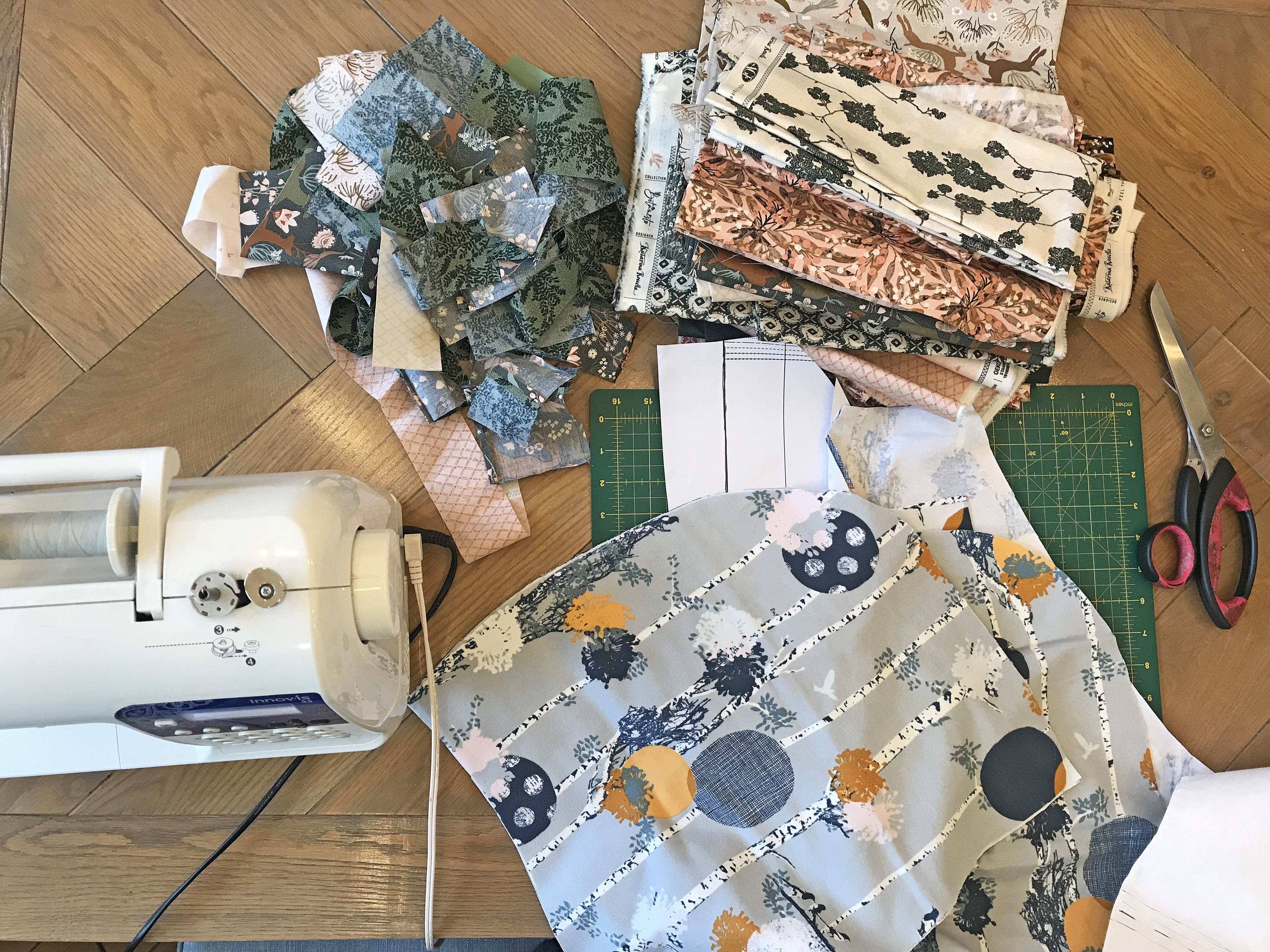
I started with cutting the fleece as a base, but using batting or flannel is perfect too (you could even recycle an old thinner blanket for this — it adds beautiful loft and sustainability to the project). This base acts as both your stabilizer and your quilting layer, so there’s no separate quilting step at the end.

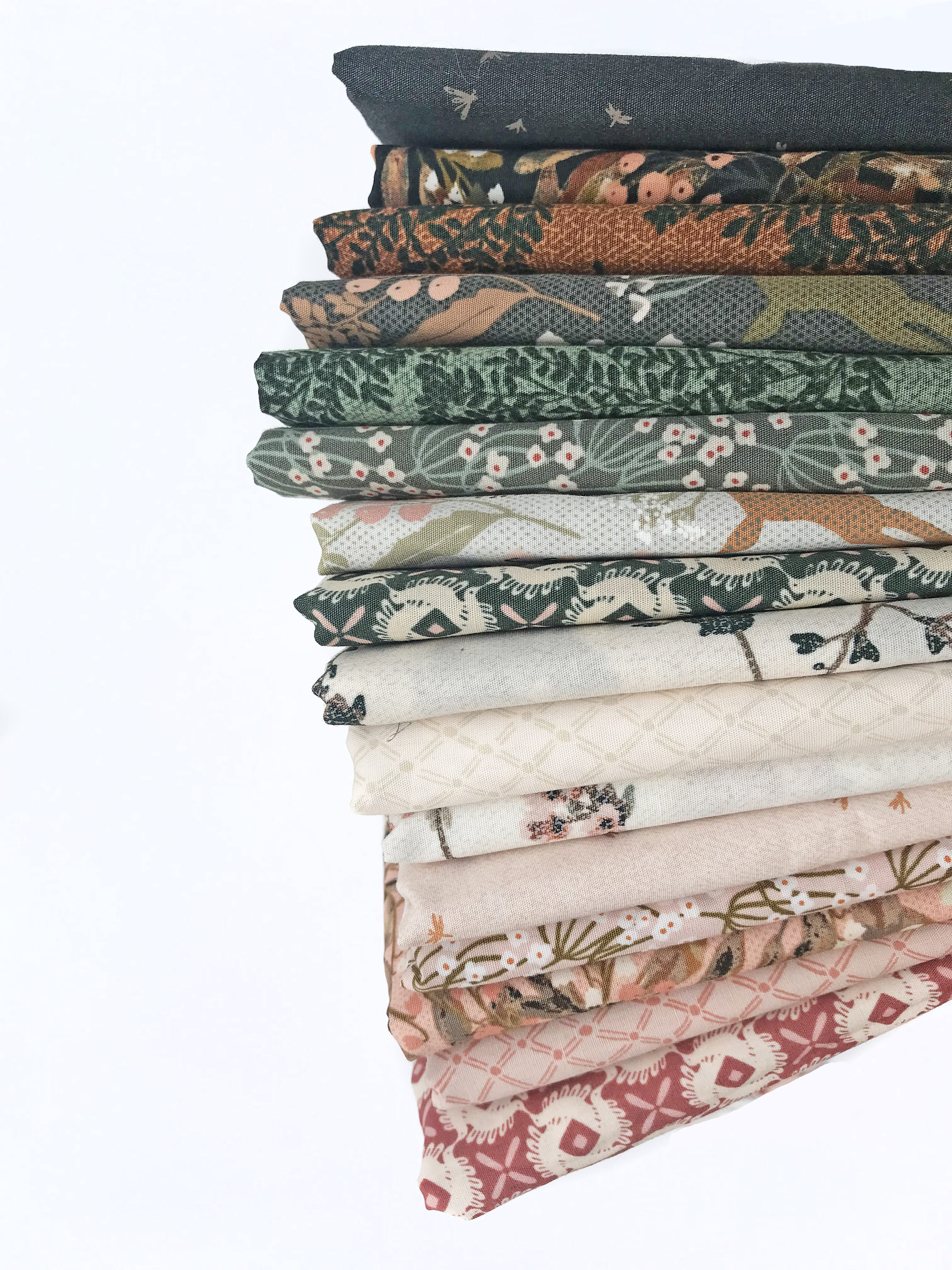
image courtesy of Art Gallery Fabrics

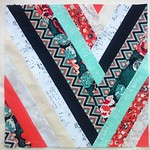
It’s always so satisfying turning simple strips into dynamic patchwork panels. Of course, there's a handy strip roll with already pre-cut 2.5" strips, so it's perfect for this project!

I started by cutting all my Soar fabrics (all 16 prints) and some new and old Seedling prints into 2.5" x 21" strips. 

From older Seedling colors, I used Licorice, Sage, Shitake, Copper, Clay and Pewter. So 16 Soar prints and 10 total of Seedling colors (4 new + 6 old colors). 

I have cut 2 (two)- WOF (2.5" x 42") strips from each of these these 26 fabrics and then subcut all the strips in half for easier strip-sets making. 

It's like 130" x 42" total of fabrics used for the patchwork. I had some leftovers, though...

From there, I created strip sets of varying widths, from 3 to 8 strips per set. The process is straightforward, but a few little tips make all the difference: change your sewing direction as you stitch the strips together. This helps prevent bowing or curving of the strip sets, keeping everything nice and straight. After stitching each set, I pressed the seams — careful open seams pressing is key for smooth, flat sets.

Once pressed, it was time for my secret weapon: the Stripology squared ruler. Using this handy tool, I cut the strip sets into new, perfectly even patchwork strips — ready to assemble into the larger design.

This technique is perfect for creating structured, versatile patchwork, and it’s especially fun when mixing fabrics of different colors, textures, or patterns. Every set feels like a mini quilt in itself, and the possibilities are endless!


Instead of sewing patchwork blocks first and quilting later, each fabric strip is added directly onto the batting base. I began from the bottom — placing the first strip right side up and stitching it down with a simple straight stitch at the bottom.

From there, I added the next strip right sides together, just like traditional patchwork. After stitching the seam, I flip the new piece open and press it flat. Because it’s attached to the batting underneath, it’s already quilted in place.

Piece by piece, adding strips in rows, going up, trying to maintain good alignment, until you reach the upper edge of the base.


Beside fabrics for the patchwork strips and flannel or fleece for the base or lining, (calculate at least 2-3 yds  for the patchwork and the same for the base) you will need around 1.5-2 yds of the trimming for wrist cuffs and waistline or some kind of jersey fabric that can be cut in strip, folded and used as ribbing. And a zipper. I used the 60 cm one.


You can also add the eyelets and a cord within the hoodie part- as the pattern provides. I didn't, as I lined the hoodie part with the Seedling Forest print. 


The first thing I did was the smallest - the front pocket. 


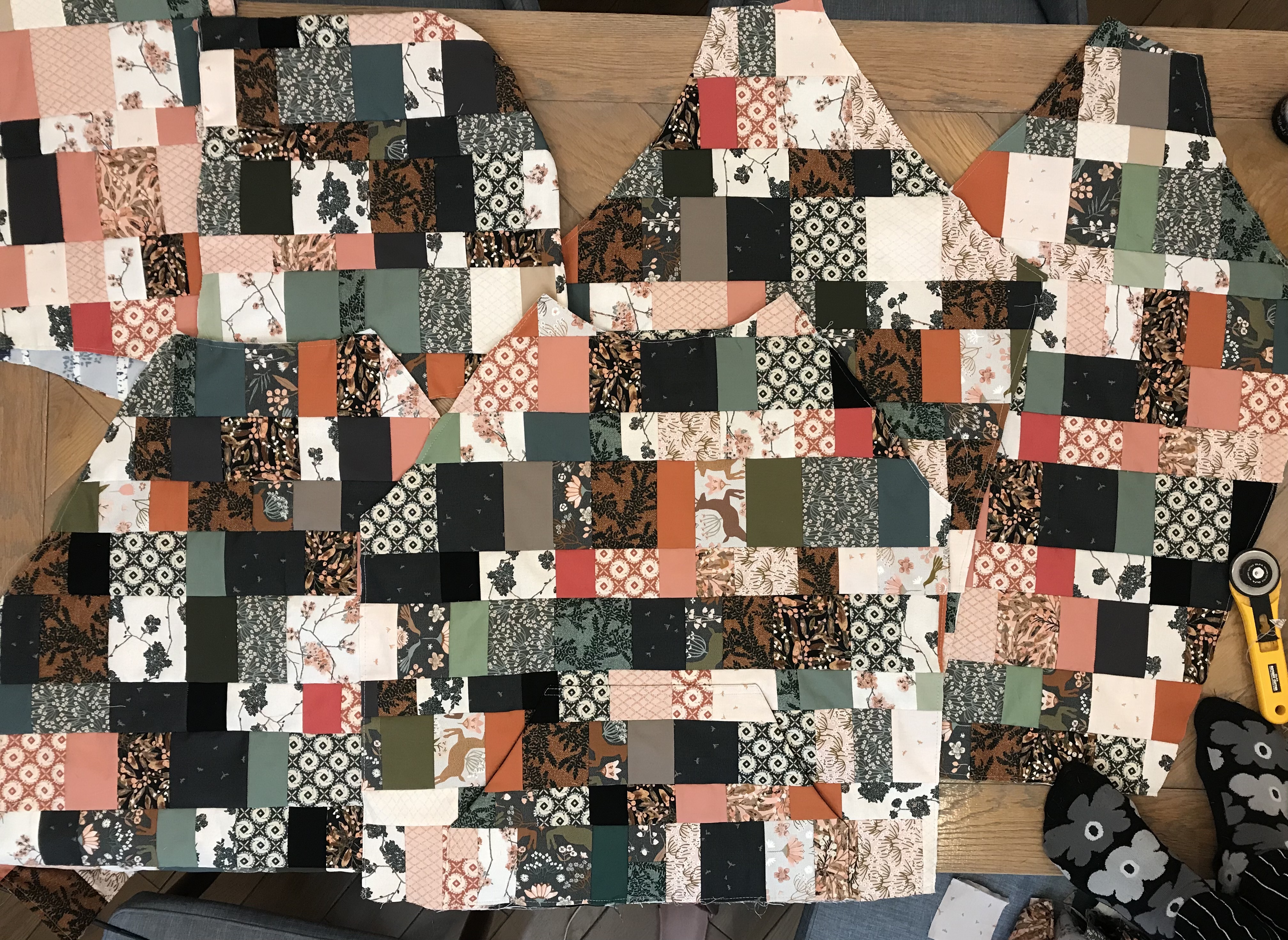
Here are all the hoodie pieces before adding the zipper and final assembling.


Again, you can watch this convenient video for adding the zipper.

I made a following video while sewing my first hoodie, it could be helpful to watch. 

The patchwork method is the same, only that this time I used only 2.5" strips while in the first video/hoodie, I used different strip widths. 

I really hope that you may find this inspiring and I really think that this is amazing way to use some loved fabric scraps and quilt blocks and leftovers! And I think that it's easier than making a jacket or coat, so maybe worth trying before sewing something a bit more delicate.


Happy sewing, Katarina


Monday, 19 December 2022

Botanist patchwork hoodie

 Patchwork hoodie, as a sort of quilted coat or jacket was something that I always wanted to make. 

And ever since I created this coat 13 years ago (how is that possible?), I had a desire to make something similar, even because that coat was over-worn and loved so much that the fabrics started to show many signs of that. And that was the period when I didn't know anything about patchwork and quilting, so I used the fabrics that had that collaged vibe.


So, back to the actual hoodie - I searched for a pattern that was featuring raglan sleeve (a sleeve that extends in one piece fully to the collar, leaving a diagonal seam from underarm to collarbone) and Burda's 6718 pattern was just what I needed. I think that even this free pattern can be great, but the sleeve type just wasn't the one I wanted to do for this particular patchwork style and I think that raglan sleeves are really even beginner friendly.


I used my "Stamped Grove" flannel as a base to sew my patchwork pieces to it. I was planning to use a matching "Woodlandia" flannel from the same, Botanist collection as the rest of my fabrics, but shipping problems just didn't allow that. 

And yet, as that backing or inner part of the hoodie isn't visible, it really doesn't matter. You can use even any kind of plain flannel or even cotton batting (or both to add an extra level of coziness).

Beside fabrics for patchwork and flannel for the base or lining, (calculate at least 2-3 yds in total for the patchwork-outer part and the same for the lining) you will need around 1.5-2 yds of the trimming for wrist cuffs and waistline or some kind of jersey fabric that can be cut in strip, folded and used as ribbing. You can also add the eyelets and a cord within the hoodie part- as the pattern provides.

The first thing to do is to decide on the fabrics you will use, in my case it was easy as I had my collection that was already curated like that so I just added a few pure solids to add some colorful accents and a bit of whimsy. This hoodie was planned for my son, who's modeling it, but I think that I will find a way to steal it :) 

As this all started as an experiment (it was the first time to use this pattern and also this method), so I really wasn't sure what I will get and how satisfied I will be with the result. But I can say that I am very excited about it, loved the process and I am already looking forward to the next one.

What I have learnt is that the pattern itself (all Burda patterns don't have the seam allowance calculated, so you need to add them) can run a bit small but only due to the fact that the materials used for this project aren't stretchy like usual knit fabrics that are used for hoodies. So, even if this is the Men's pattern and my 18 yrs old son (almost 180 cm height) is wearing an M, I used the last available size marked lines to cut all my fabrics - I believe it would be like an XL. Next time, I will add just a tiny bit to it, except to the hoodie-head part itself. And I will round it a bit better. But everything fitted nicely and I absolutely didn't have any issues, so I can highly recommend it!

I was driven by the quilt as you go method to assemble the strip sets that I organized in rows. 

From all the fabrics I wanted to use, I have cut  2", 2.5", 3", 3.5" and 4" wide strips. At least 2 strips of each of 16 fabrics + around 10 solids. 

So I think that a fat quarter bundle of a collection that has at least 10 assorted prints would be fine for one hoodie-for the external, or top part.


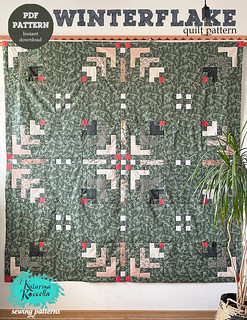
With the fabric strips I made the random strip sets, combining fabrics in no particular way. Some strip sets were longer, some narrower, some shorter, so really just upon liking. I also had some leftovers from my previous project: Winterflake quilt and it was great to use them too. So I think that any patchwork or quilt bock leftovers can be great for this type of hoodie.

After making the strip sets, I have cut them into same 2", 2.5", 3", 3.5" and 4" increments-strips (on the 90° from the pieced seams).


I started from the bottom parts of the cut flannel pieces, adding strips in rows, going up, trying to maintain good alignment. I draw a few horizontal lines to guide me additionally. Flannel was very good option for this as it would nicely adhere quilting cotton strips, so I didn't have to press my rows with iron frequently.


The first thing I did was the smallest - the front pocket. After finishing the exposed, patchwork side of the pocket, I have lined the pocket with another plain piece of fabric, as I thought that it would be better and cleaner than just sewing the pocket to the front hoodie part over folded edges.
I started to sew the patchwork strips on the front hoodie part according to the same pocket strip order, as I wanted to have "invisible" transition.


Here are all the hoodie pieces before final assembling.

I made a video where I tried to gather some small video clips and pics that I took during the sewing and assembling, as it may be easier to understand.

I really hope that you may find this inspiring and I really think that this is amazing way to use some loved fabric scraps and quilt blocks and leftovers! And I think that it's easier than making a jacket or coat, so maybe worth trying before sewing something a bit more delicate.


My son loves it so much and I am sure it will be a show stopper ðŸ˜Ž
(I am missing so much the period when my kids were small and actually wanted to wear some mommy made clothes, so this was such a wonderful request and honor for me to make🤟)

xx
Katarina


Wednesday, 6 February 2019

The Splendid Sampler 2- my Coastline Sponge cake quilt block


Hi and welcome :)
I felt very honored and excited when Pat Sloan and Jane Davidson invited me to be one of the 80 featured designers in their wonderful Splendid Sampler 2 book and therefore to create a quilt block for that opportunity. It was really wonderful experience I gained in this collaboration, and I am beyond amazed by incredible talent, professionalism, kindness and generosity by our hosts and all designers participating in this project!

I was also delighted when I got my copy of the book-beside wonderful blocks, there are a few pages by the end of the book, explaining some quilting basics and many different techniques used for certain blocks, like embroidery, appliqué, curved piecing, English paper piecing, Foundation piecing and more!


Soooooo, I am so extremely happy that today is my day to share more about my quilt block from the book named: Coastline Sponge cake, that can be found on the page 39 of the book.

For my block inspiration, I started with my favourite  traditional quilting technique: strip piecing! Added to that were some nature and food details so hence my statement:
"Strip piecing always reminds me of baking a cake, with layers of yummy ingredients (here fabrics) placed together. The shades of these fabrics are the colors of the coastline and the sea, recalling my best childhood memories of vacations spent by the seaside, eating my favourite sponge cake".


The colors of the fabrics and thread sent to me from their sponsors: Moda and Aurifil were matching my inspiration nicely, so here are a few shoots of the original block, created for the book and to match other designers blocks when joined together in a big quilt.


As a fabric designer for AGF, I had to try the block in some of my fabrics. 
My latest fabric collection, Grid was calling me and I took some step-by step pics while re-creating  the block.


There are 5 different fabrics needed for my block. For nice shading effects-I suggest using different valued fabrics for the strip piecing units.


For the best results, I strongly suggest using the 1/4 seam allowance foot for precise piecing and also pressing fabrics with open seams after each of the steps.

Love matching seams!!!


I really enjoyed making this block and hope that you will try it and have fun with it, too and also entered it in the giveaway pool (details to follow;)!
 Here's my page from the book:


And speaking about the giveaway, for this special day, I decided to giveaway 3 of my quilt patterns, to one lucky winner!!! All you need to do is to leave a comment here, under this post and I will randomly choose a winner by the end of this week, on Sunday, February 10th, by 10 pm, Central European time, open worldwide. You can leave any comment you like, but don't forget to leave your e-mail, so that I can contact you, if you will be my Random Pattern winner.
They patterns can be chosen  from my Etsy shop:

And, another great giveaway for you is coming directly from my amazing AGF team , who is this week's sponsor on Sample Spree blog and they will be giving away one entire FQ bundle of my newest range - GRID fabrics, just like those I used in my block:) 
For this FQ bundle giveaway, you must make my block and share the photo of the finished block to be entered in the giveaway directly on the Splendid Sampler website!!!


You can also visit and join the Splendid Sampler's official Facebook group for more fun!!!
Please make sure to visit the official Splendid Sampler website regularly to get more info about the projects, blocks, tips, and giveaways too!!
Thank you so much for visiting and good luck!!!
xx
Katarina

___________UPDATE__________

We have a pattern giveaway winner!!!

Thank you so much to everyone participating, the random winner is number 15, Jill, that has been contacted via e-mail!!!!