. . . . . . . . . . . . . . . . . . . . . . . . . . . . . . . . . . . . . . . . . . . . . . . . . . . . . . . . . . . . . . . . . . . . . . . . . . . . . . . . . . . . . . . . . . . . . . . . . . . . . . . . . . . . . . . . . . . . . . . . . .
Showing posts with label pattern. Show all posts

Monday, 19 December 2022

Botanist patchwork hoodie

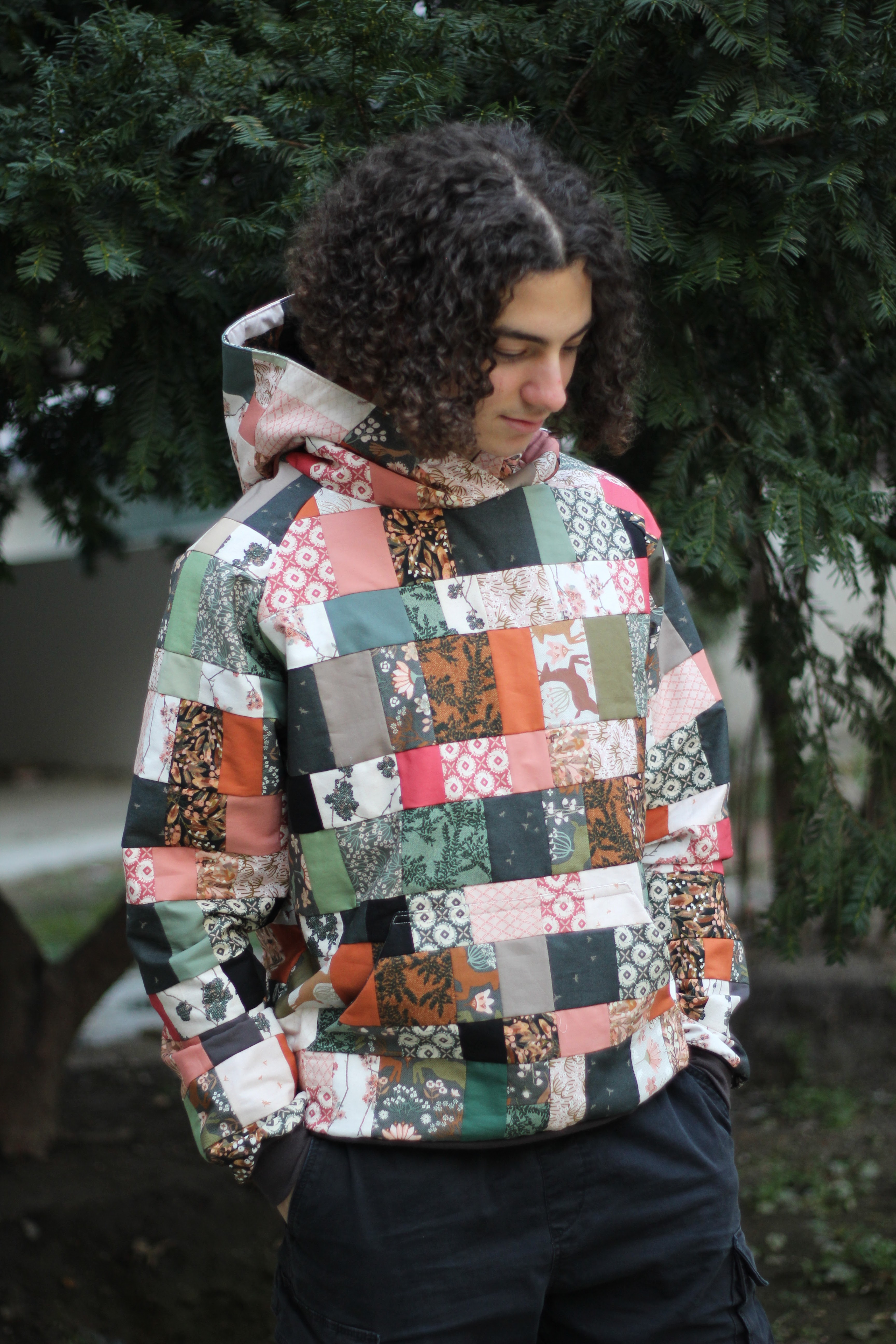
 Patchwork hoodie, as a sort of quilted coat or jacket was something that I always wanted to make. 

And ever since I created this coat 13 years ago (how is that possible?), I had a desire to make something similar, even because that coat was over-worn and loved so much that the fabrics started to show many signs of that. And that was the period when I didn't know anything about patchwork and quilting, so I used the fabrics that had that collaged vibe.

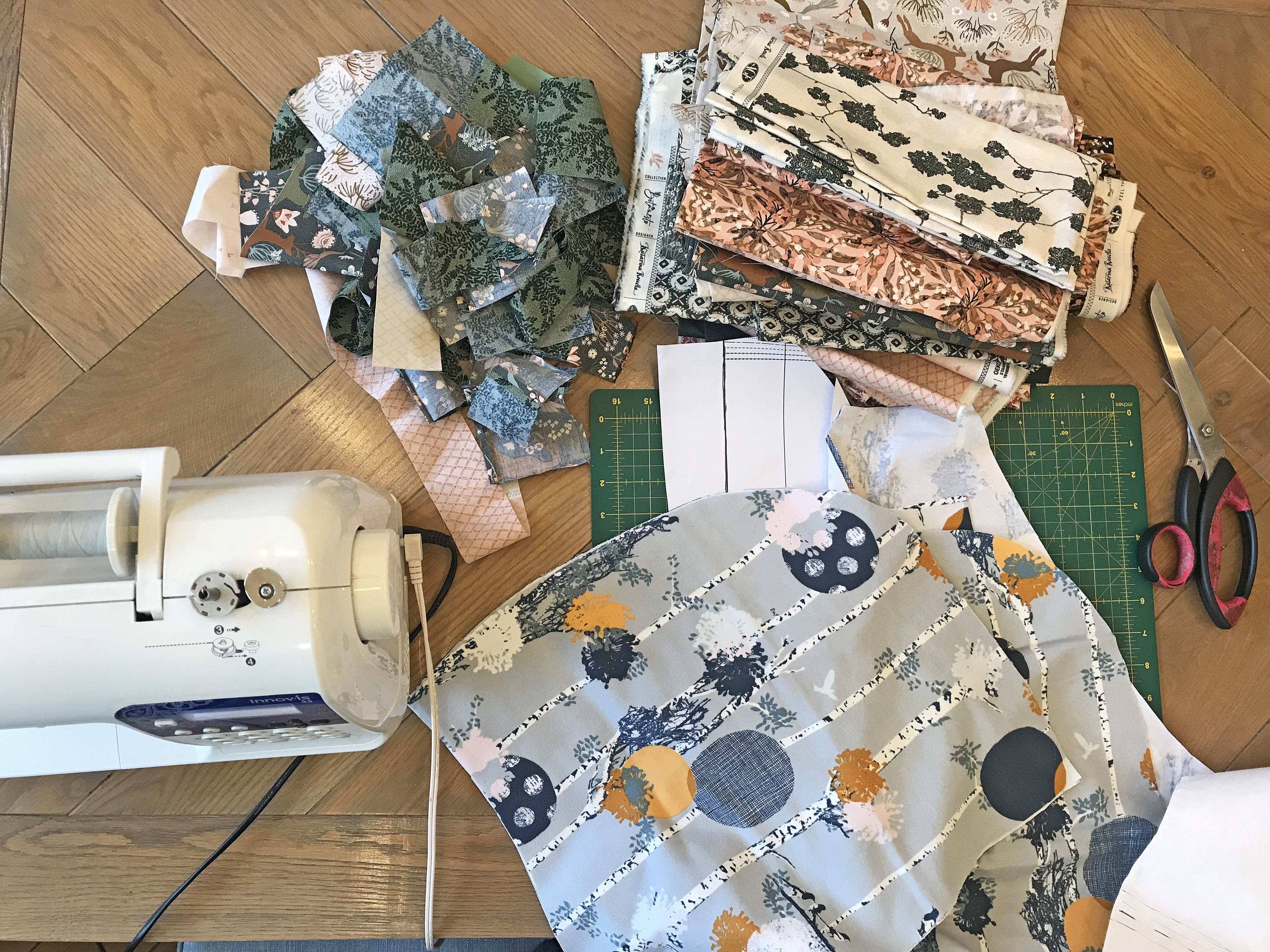


So, back to the actual hoodie - I searched for a pattern that was featuring raglan sleeve (a sleeve that extends in one piece fully to the collar, leaving a diagonal seam from underarm to collarbone) and Burda's 6718 pattern was just what I needed. I think that even this free pattern can be great, but the sleeve type just wasn't the one I wanted to do for this particular patchwork style and I think that raglan sleeves are really even beginner friendly.


I used my "Stamped Grove" flannel as a base to sew my patchwork pieces to it. I was planning to use a matching "Woodlandia" flannel from the same, Botanist collection as the rest of my fabrics, but shipping problems just didn't allow that. 

And yet, as that backing or inner part of the hoodie isn't visible, it really doesn't matter. You can use even any kind of plain flannel or even cotton batting (or both to add an extra level of coziness).

Beside fabrics for patchwork and flannel for the base or lining, (calculate at least 2-3 yds in total for the patchwork-outer part and the same for the lining) you will need around 1.5-2 yds of the trimming for wrist cuffs and waistline or some kind of jersey fabric that can be cut in strip, folded and used as ribbing. You can also add the eyelets and a cord within the hoodie part- as the pattern provides.
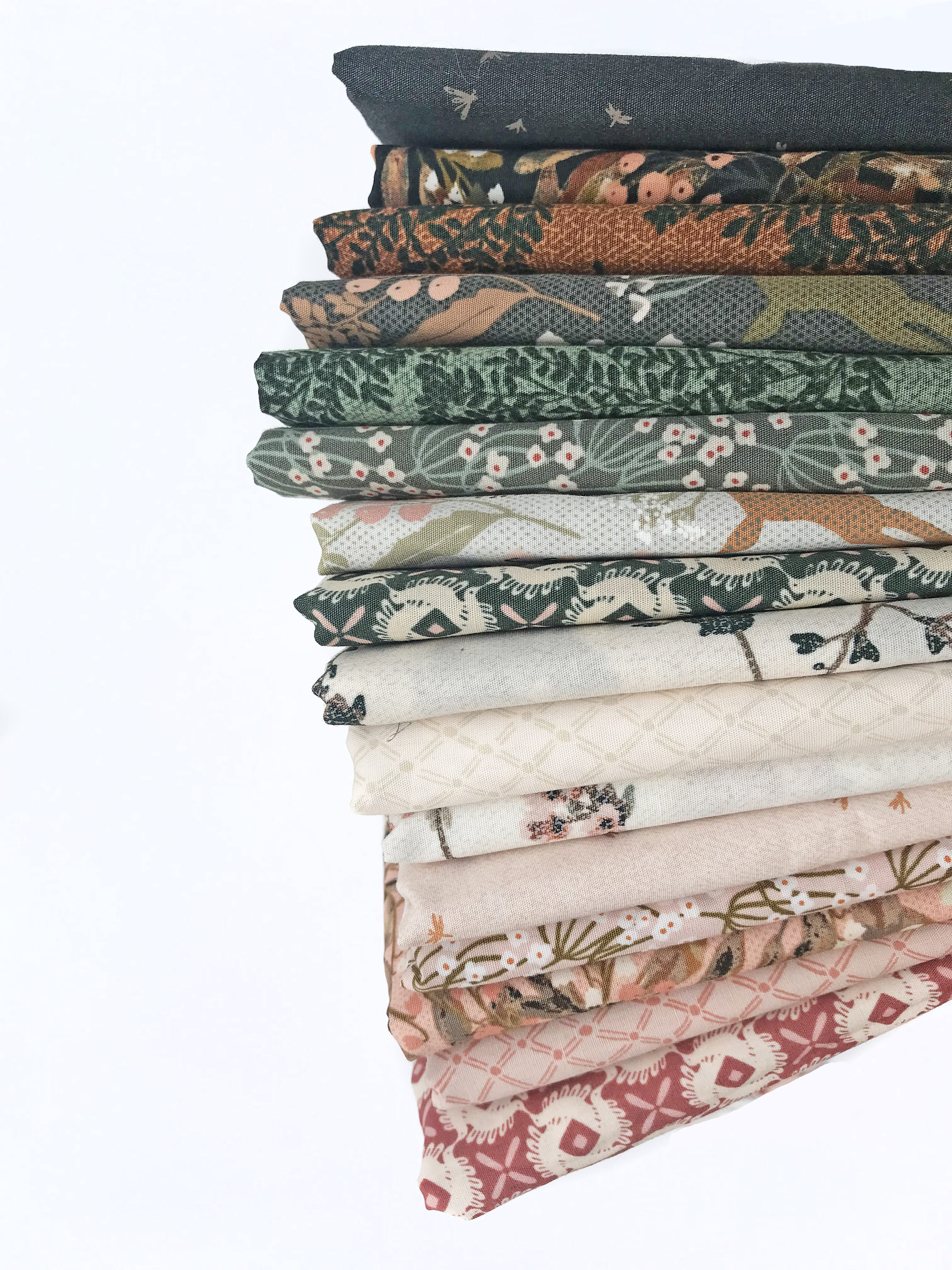
The first thing to do is to decide on the fabrics you will use, in my case it was easy as I had my collection that was already curated like that so I just added a few pure solids to add some colorful accents and a bit of whimsy. This hoodie was planned for my son, who's modeling it, but I think that I will find a way to steal it :) 

As this all started as an experiment (it was the first time to use this pattern and also this method), so I really wasn't sure what I will get and how satisfied I will be with the result. But I can say that I am very excited about it, loved the process and I am already looking forward to the next one.

What I have learnt is that the pattern itself (all Burda patterns don't have the seam allowance calculated, so you need to add them) can run a bit small but only due to the fact that the materials used for this project aren't stretchy like usual knit fabrics that are used for hoodies. So, even if this is the Men's pattern and my 18 yrs old son (almost 180 cm height) is wearing an M, I used the last available size marked lines to cut all my fabrics - I believe it would be like an XL. Next time, I will add just a tiny bit to it, except to the hoodie-head part itself. And I will round it a bit better. But everything fitted nicely and I absolutely didn't have any issues, so I can highly recommend it!

I was driven by the quilt as you go method to assemble the strip sets that I organized in rows. 

From all the fabrics I wanted to use, I have cut  2", 2.5", 3", 3.5" and 4" wide strips. At least 2 strips of each of 16 fabrics + around 10 solids. 

So I think that a fat quarter bundle of a collection that has at least 10 assorted prints would be fine for one hoodie-for the external, or top part.


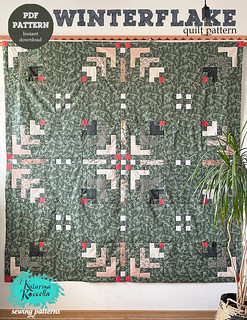
With the fabric strips I made the random strip sets, combining fabrics in no particular way. Some strip sets were longer, some narrower, some shorter, so really just upon liking. I also had some leftovers from my previous project: Winterflake quilt and it was great to use them too. So I think that any patchwork or quilt bock leftovers can be great for this type of hoodie.

After making the strip sets, I have cut them into same 2", 2.5", 3", 3.5" and 4" increments-strips (on the 90° from the pieced seams).


I started from the bottom parts of the cut flannel pieces, adding strips in rows, going up, trying to maintain good alignment. I draw a few horizontal lines to guide me additionally. Flannel was very good option for this as it would nicely adhere quilting cotton strips, so I didn't have to press my rows with iron frequently.


The first thing I did was the smallest - the front pocket. After finishing the exposed, patchwork side of the pocket, I have lined the pocket with another plain piece of fabric, as I thought that it would be better and cleaner than just sewing the pocket to the front hoodie part over folded edges.
I started to sew the patchwork strips on the front hoodie part according to the same pocket strip order, as I wanted to have "invisible" transition.


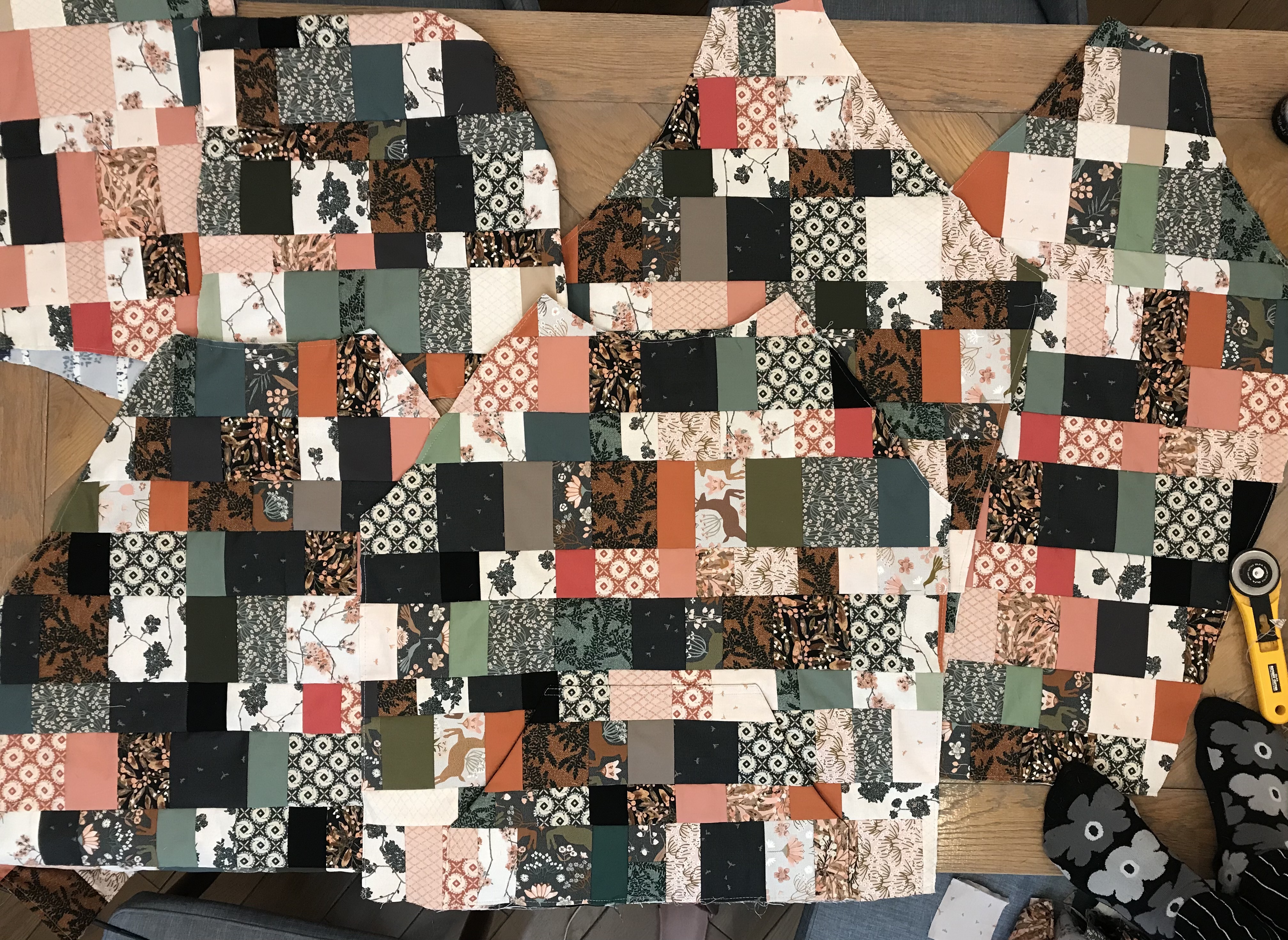
Here are all the hoodie pieces before final assembling.

I made a video where I tried to gather some small video clips and pics that I took during the sewing and assembling, as it may be easier to understand.

I really hope that you may find this inspiring and I really think that this is amazing way to use some loved fabric scraps and quilt blocks and leftovers! And I think that it's easier than making a jacket or coat, so maybe worth trying before sewing something a bit more delicate.


My son loves it so much and I am sure it will be a show stopper ðŸ˜Ž
(I am missing so much the period when my kids were small and actually wanted to wear some mommy made clothes, so this was such a wonderful request and honor for me to make🤟)
xx
Katarina


Saturday, 19 February 2022

Zellige quilt pattern


 It's zellige quilt pattern release day and I can't be more excited to show you something that I was working on for the past three mon

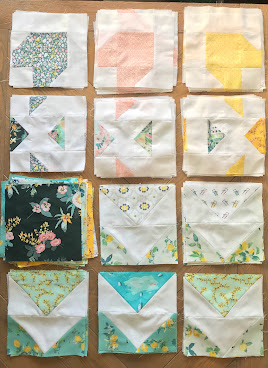
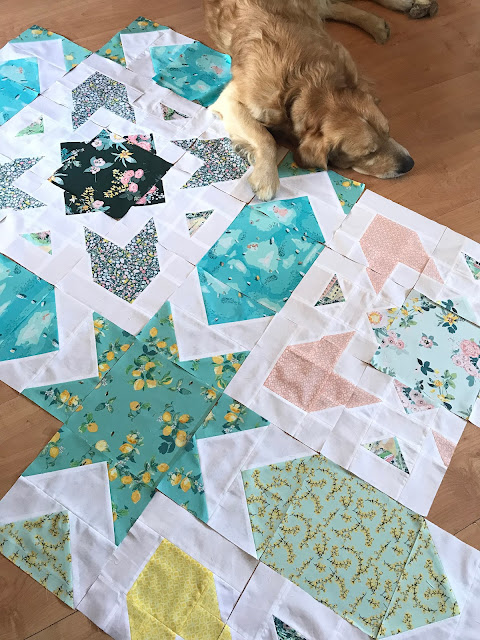
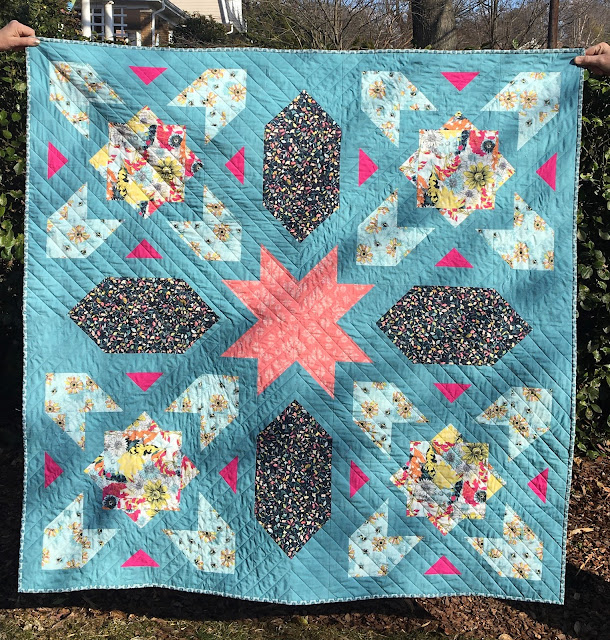
Zellige quilt pattern is constructed with traditional flying geese (FG) quilt blocks, half square triangles (HSTs) and simple squares with aim to obtain nice colorful interplay and lovely sawtooth star shapes. My inspiration for this quilt pattern was Mediterranean widely famous Moorish, Zellige tiles.

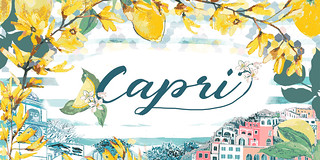
With my Capri collection in mind, this geometrical interplay and pattern design seamed like a great match.

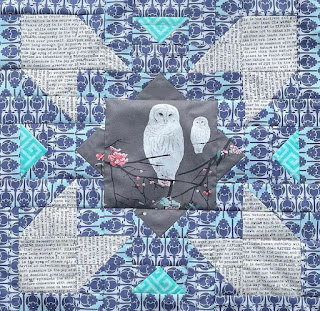
Here is the original picture that served as inspiration for the quilt construction. It's fun to see how some ideas are born! 

This quilt pattern comes in different sizes :

- pillow front - two variations: 24.5” x 24.5” 

- table runner: 24.5” x 72.5”

- baby: 40.5” x 40.5”

- throw: 72.5” x 88.5” 

- bed: 88.5” x 104.5” 


But the combinations are limitless, so using just pillow fronts and connecting blocks, you can obtain different layouts and unique lap size quilts. 


It's always fun to see the process, but the best part is to see the final quilt. Another amazing part of the process is to have a good company to share the ideas, progress, suggestions and more! Again this time I had a group of amazing ladies willing to help me testing and improving this quilt pattern and I can't be more helpful for their support. And finally to show you their testing quilt versions - they did such an amazing job!

Becky @keepmeinstitches created the unique lap size quilt using variation of AGF blenders and my fabrics from various collection: Avantgarde, Esoterra and Skopelos.


Barbara @missdaisy7 combined different AGF prints and centers from my Mothers garden print ( Lavish collection) to create her unique lap size quilt


Lynne  @tinkingalong used various AGF prints to make the unique lap size quilt


Sue @vinyardquilts made the throw quilt top in AGF solids


Amanda @marmanda created the throw quilt using Maureen Cracknell's Gloria fabrics


Jennifer @jeifner  made Zellige baby quilt top tonal version in AGF solids


Lori @thegreyfinchcompany made the baby size quilt using mostly Bonnie Christine's fabrics


Becky @countrychickfabrics created the baby size quilt in different AGF prints


Aurora @auroraa1714 made the pillow featuring my Boscage fabrics


Robbin @sewfarmquilter made 2 pillow fronts (one in each variation available from the pattern)


I just love seeing different variations and different options and I hope that you feel inspired to create your version or simply recreate one of the variations shown.
Thank you again so much to my pattern testers,
xx
Katarina

Thursday, 28 October 2021

Twenty fabric collection


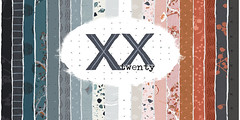
And finally, it's time to introduce you to my newest fabric collection with Art Gallery Fabrics called Twenty


When I start designing a collection, I always think about the story, or theme behind it. With this collection it was a bit different, as this was my 20th collection with Art Gallery fabrics and my idea was to gather a group of prints that would work nicely together as a group, but also individually, for different kinds of projects. So the only theme or story was cohesiveness and unified color story. I wanted to cover almost all the elements and principles of art from color, line, shape, form, value, texture, and space. So my aim was to have contrasting prints, but also very harmonious ones, to provide balance, variety, movement and rhythm, with a kind of minimalistic, almost basic designs, that would provide importance to the whole, to the collection as entity.


I was so inspired with this collection, as it has 20 designs printed on quilting cotton-that I created 2 new quilt patterns: Vibrato and Kelim


While I was making Vibrato quilt, my friend Barbara Opett created throw version of my Kelim pattern.


AGF created another amazing look book that contains many beautiful projects from different makers and I hope that you may find your favorite project to make.

xx

Katarina

Sunday, 18 October 2020

Moresco table runner


I always wanted to make one simple table runner for my table and finally I did it! I used one of my first quilt patterns that was featuring my very first fabric collection, Indelible and adapted it a bit to make this very easy to make table runner.

You can see the original pattern HERE.

And here are the measurements/requirements for this table runner:

Finished size: 27.5 x 54.5 “ (70 x 138 cm)

Block size: 14 x 14”

Total blocks per table runner: 8 (4 blocks A and 4 blocks B)

Seam allowance: ¼”

Based on the 42” wide fabric.


The whole quilt is constructed with 2 ½ strips. Each block is composed of 7 rows. 

There are 4 blocks in one orientation (blocks A) and 4 blocks in mirror-image orientation (blocks B)


Fabric A: PIC-39454 Painted Field Tangerine                                       1/6 yd

Fabric B: PIC-39457 Botanical Study Soft                                            1/6 yd

Fabric C: PIC-29458 Mystical Quest by Night                                     1/6 yd

Fabric D: PIC-29457 Botanical Study Dark                                          1/6 yd

Fabric E: PIC-29454 Painted Field Cerise                                             1/6 yd

Fabric F: PIC-29451 Arts & Crafts Rose                                               1/8 yd

Fabric G: PIC-39456 Bound Treasures Blush                                        1/8 yd

Fabric H: PIC-39455 Ornatile Vert                                                         1/6 yd

Fabric I: PIC-39458 Mystical Quest by Day                                          1/8 yd

Fabric J: PIC-39451 Arts & Crafts Cloud                                              1/8 yd

Fabric K: PE-433 Snow                                                                          5/8 yd             

Fabric L: PE-413 Caviar     or   PIC-29456                                            1/3 yd


Binding fabric: 1/2  yds (suggested)

Backing fabric: 1 3/4  yds (suggested)


Cutting directions:

¼ seam allowances are included


eight (88.5” x 2.5” rectangles from Fabric A

eight (8) 8.5” x 2.5” rectangles from Fabric B   

eight (8) 8.5” x 2.5” rectangles from Fabric C   

eight (8) 8.5” x 2.5” rectangles from Fabric D   

eight (8) 6.5” x 2.5” rectangles from Fabric E   
eight (8) 4.5” x 2.5” rectangles from Fabric F   

eight (8) 2.5” x 2.5” squares from Fabric G   

eight (8) 6.5” x 2.5” rectangles from Fabric H   

eight (8) 4.5” x 2.5” rectangles from Fabric I    

eight (8) 2.5” x 2.5” squares from Fabric J    

eight (8) 2.5” x 2.5”  squares from Fabric K

eight (8) 4.5” x 2.5” rectangles from Fabric K

hundred (32) 6.5” x 2.5” rectangles from Fabric K

eight (8) 2.5” x 2.5”  squares from Fabric L

eight (8) 4.5” x 2.5” rectangles from Fabric L

eight (8) 6.5” x 2.5” rectangles from Fabric L


                                                BLOCK A   and   BLOCK B


And here's the assembled table runner:


If there will be some interest, I will probably write the PDF pattern soon, but hopefully this can help enough for anyone willing to create it ;)


Enjoy,
Katarina